What are the three Cs of pool maintenance?
Circulation, cleaning and chemistry. They work in that order — chemistry cannot fix a pool that is not circulating, and no amount of chlorine substitutes for brushing.
Why does my chlorine disappear so fast?
In Florida it is usually stabiliser. Too little and the sun destroys chlorine within hours; too much and the chlorine is there but chemically locked and cannot sanitise. Both read as "the chlorine keeps vanishing" and they need opposite fixes, which is why testing matters.
How often should pool water be tested in Deltona?
Weekly, all year. Chlorine and pH move within days in Central Florida heat, and a week of afternoon storms can shift every reading on the panel. Stabiliser and calcium hardness move slowly and are worth a careful look every month or so and after any heavy rain or water top-up. A pool tested weekly rarely surprises anyone.
How much does a pool water test cost?
A standalone testing visit is priced before we come and the number is confirmed with you, so there is nothing to work out on the day. If you want the water corrected on the spot, we tell you what that costs before adding anything. On weekly service the full panel is run every visit and is part of the monthly price, chemicals included.
How do I know the water is safe for my kids and the dog?
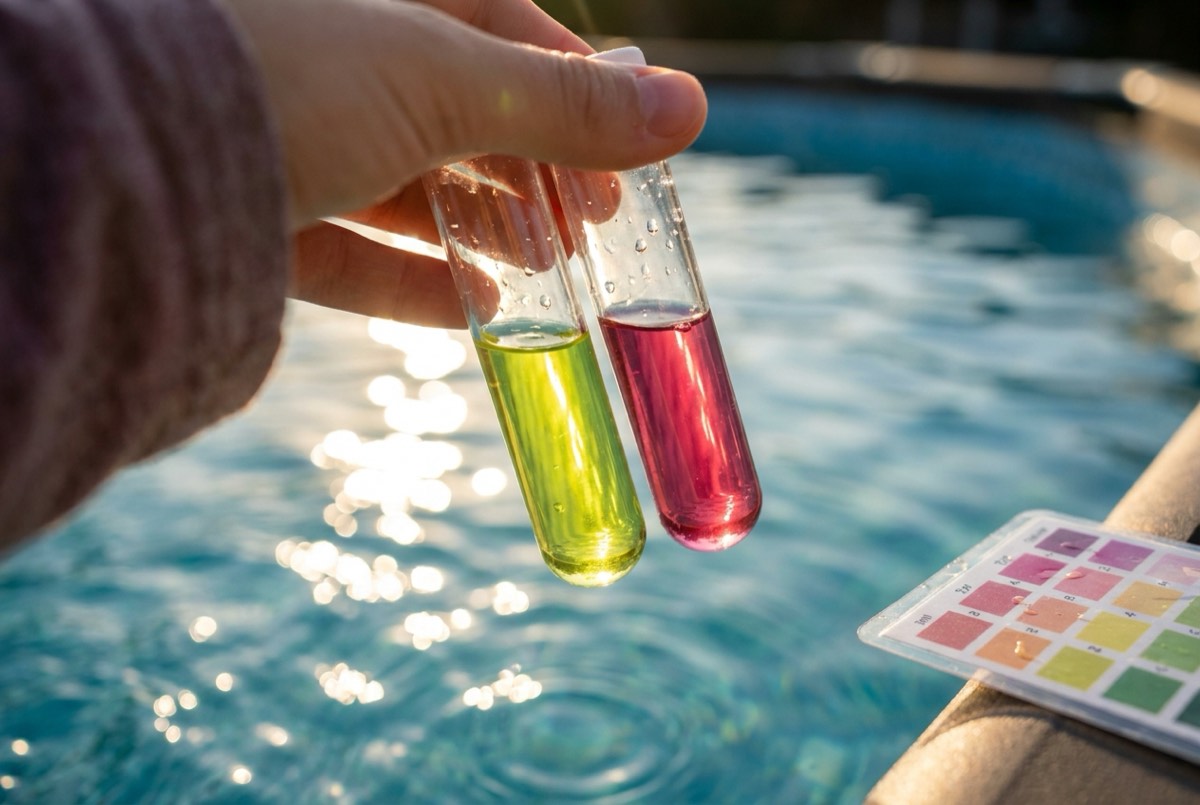
Free chlorine in range, pH in range and clear water you can see the floor through. That is the whole test. Chlorine smell is not a sign of safety; a strong smell usually means combined chlorine, which is spent sanitiser, and the pool needs shocking. The sheet from a test tells you where each of those readings sits, and if the water needed a heavy dose to correct it we tell you when it is back in swimming range.
Do salt water pools need testing too?
Yes, more than people expect. The cell makes chlorine, but pH, alkalinity, stabiliser and hardness still have to be managed, and salt systems push pH up steadily, which is what scales the cell. A salt pool test adds the salt reading to the panel so you know whether the cell has what it needs. Anything wrong with the cell itself goes to a licensed pool contractor.
Does rain change the readings?
Yes. Rain is slightly acidic and carries no chlorine or stabiliser, so a heavy afternoon storm dilutes the pool, drops pH and alkalinity, and washes pollen and dust off the screen into the water. One storm is a nudge; a wet week can move every number. It is the main reason a Florida pool wants testing weekly rather than monthly.
Is the chemistry different under a screened enclosure?
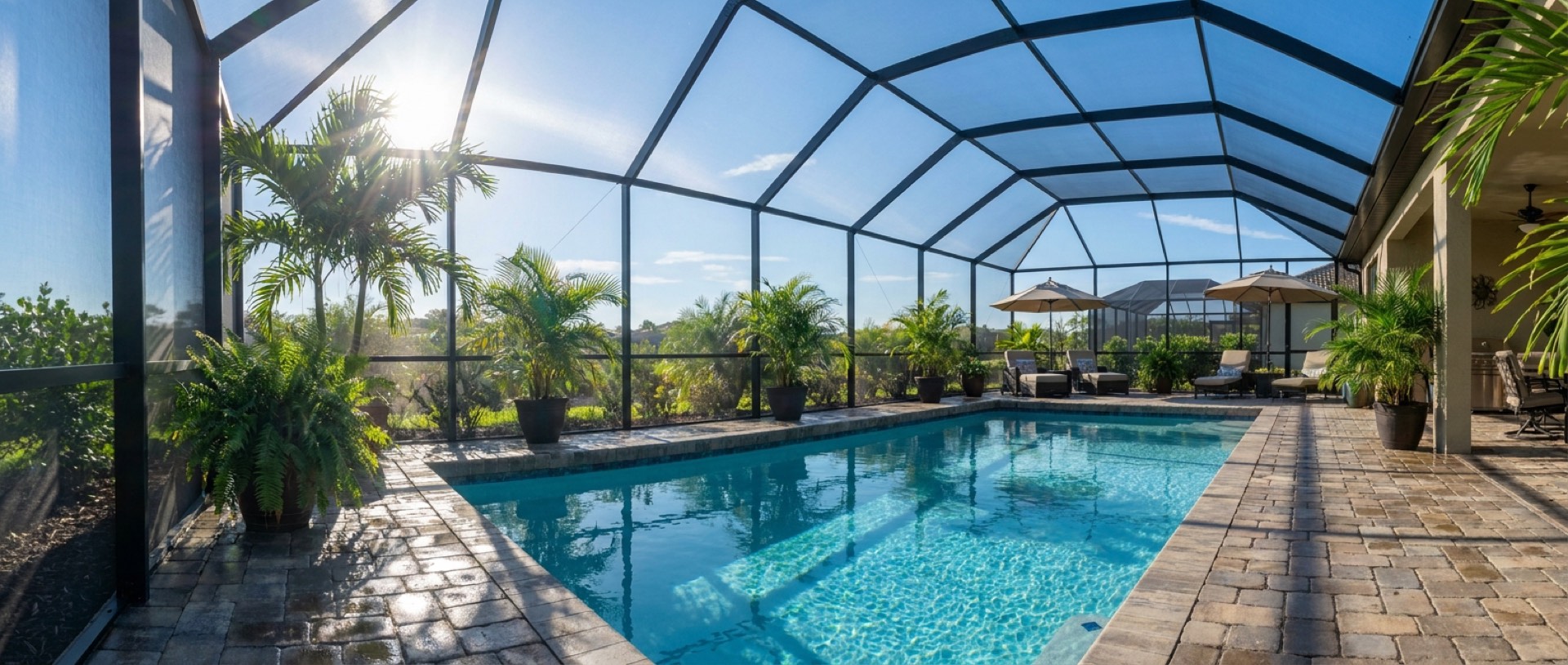
Slightly easier, not different. The screen cuts direct sun, so chlorine lasts longer, and it keeps leaves out, which lowers the organic load. Pollen, dust and rain still come straight through the mesh, and pH still climbs. A screened pool is tested on the same panel; it just tends to need smaller corrections.
What if the numbers are still off after I add what the sheet says?
Some readings respond in hours and some take days. Chlorine and pH move quickly; stabiliser dissolves slowly and calcium hardness and alkalinity settle over a few days of circulation. If a reading will not move at all, it points to something other than the dose: a filter too loaded to hold the water, stabiliser so high it needs water replaced, or a pump that is not really circulating. Those are the cases we flag on the sheet and refer where they need a licensed pool contractor.