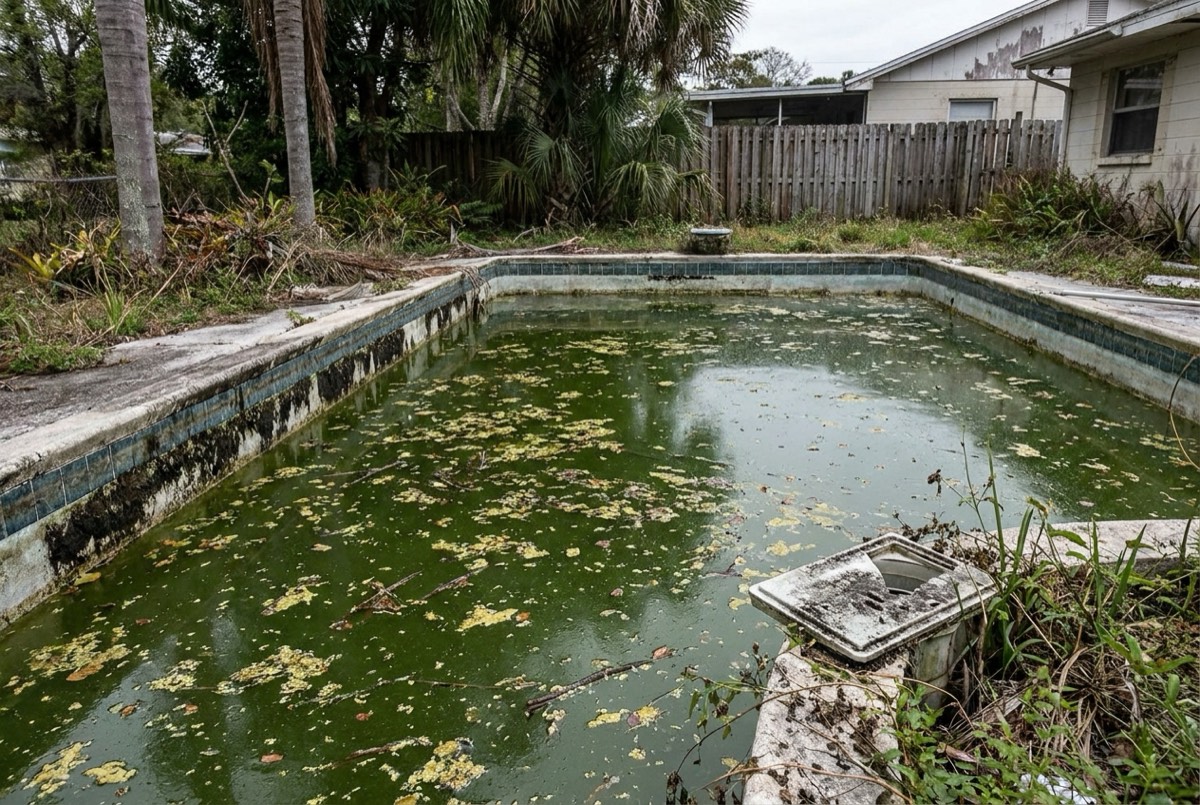
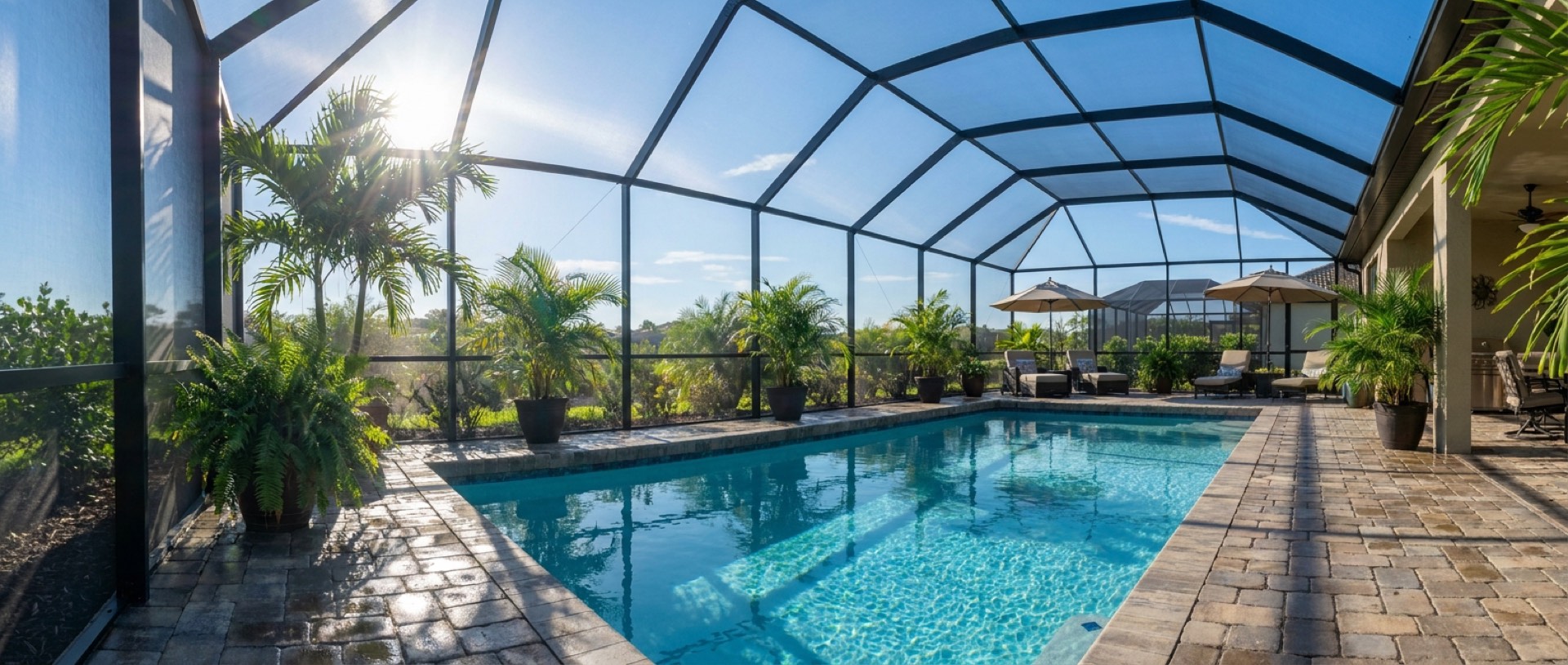
What is the fastest way to clear up a green pool?
Circulation and filtration do most of the work — chemicals alone will not clear it. The pump has to run, the filter has to be clean enough to actually catch the dead algae, and the walls have to be brushed so the algae lets go. That combination is why it usually takes three to five days rather than one.
What does a green to clean pool service include?
Testing, debris removal, shock and algaecide over several visits, repeated brushing, repeated filter cleaning, and a full rebalance at the end. We tell you up front if the pool is bad enough that draining is the cheaper route.
Can every green pool be saved without draining?
Most can. The exceptions are pools that have been standing long enough to stain the plaster, or where the stabiliser level is so high that chlorine cannot work — those may need water replaced. We will say so rather than sell you weeks of chemicals that cannot win.
How much does green pool cleanup cost in Deltona?
It depends on how far gone the pool is, its size, the filter type, how much debris is on the floor and the stabiliser level, so we price it from the first visit rather than over the phone. The number covers the whole recovery as scoped and is agreed with you before the first treatment. It does not cover equipment work or replacing water, which we refer out.
When can we swim again?
When the water is clear and the chlorine has come back down to a normal swimming level, which we test and confirm on the final visit. During the recovery the chlorine is held far above swimming range on purpose, so nobody goes in until we say so, however blue it starts to look.
Is the shock treatment safe around kids and pets?
The water is not safe to swim in or drink during the recovery, and the note after each visit says so plainly. Keep children out of the pool and stop the dog drinking from it until the final test. The chemicals themselves are standard pool products, added to the water and circulated; nothing is left on the deck or lanai.
My salt water pool turned green. Is the process different?
The recovery is the same: shock, brush, filter, rebalance. A salt cell cannot produce chlorine fast enough to kill an established bloom, so we shock with chlorine directly and let the cell take over again once the water is clear. We also check the salt level and the cell for scale, because a scaled cell producing almost nothing is a common reason a salt pool went green in the first place.
What if it rains during the recovery?
Rain dilutes the chlorine and drops the pH, so a storm mid-recovery usually means an extra top-up on the next visit, which is why we test every time rather than dose to a plan. Heavy rain also washes debris off the screen into the pool. Neither stops the recovery; they just make the next visit a little longer.
What if the pool is still green after the visits?
Then something other than algae is the problem, and we will have been saying so along the way. A pool that does not respond to repeated shock and brushing almost always has locked stabiliser or no real circulation, and no amount of chemical fixes either. We stop, explain what we are seeing, and refer the equipment or the water replacement to a licensed pool contractor. We do not keep charging for visits that cannot work.